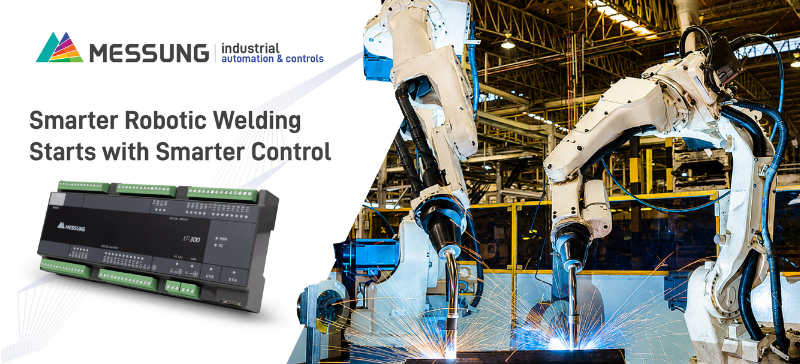
What does it take to achieve perfect welds every time?
In automotive manufacturing, consistency is everything. A single variation in weld quality can impact product performance, increase rework, and affect production timelines. As manufacturers strive to meet growing demand while maintaining stringent quality standards, traditional control methods are no longer enough. The answer lies in intelligent automation. By combining advanced PLC for automation with connected technologies such as IOT and IIOT, manufacturers can build smarter, faster, and more reliable production environments that deliver measurable results.
The Rising Need for Intelligent Welding Automation
The automotive industry is witnessing a significant shift toward digital manufacturing. Increasing production volumes, tighter quality requirements, and growing pressure to improve operational efficiency are driving investments in advanced Welding Automation Systems.
Among the most critical processes in automotive component manufacturing is robotic welding. Vehicle exhaust systems require highly accurate welds to ensure durability, safety, and compliance with industry standards. Achieving this level of consistency across thousands of components demands precise machine coordination and intelligent process control.
This is where Programmable Logic Controllers play a vital role. Acting as the brain of the operation, PLCs coordinate robotic welding machines, sensors and field devices to create a synchronized and highly efficient manufacturing environment.
The Challenges
Maintaining Quality at Scale
A leading automotive component manufacturer sought to automate the welding process for vehicle exhaust systems. The objective was straightforward but challenging. The company wanted to achieve consistent weld quality, improve production throughput, and simplify communication between robotic welding stations and peripheral devices.
However, several operational obstacles stood in the way.
- Maintaining consistent weld quality across high-volume production batches was becoming increasingly difficult. Multiple devices within the welding cell needed seamless coordination.
- Coordinating multiple devices within the welding cell. Communication between robots, sensors, fixtures, and field devices had to remain reliable and uninterrupted.
- Production interruptions caused by delayed fault identification impacted efficiency.
- Operators also lacked clear visibility into machine status and production parameters, making troubleshooting slower and more complex.
- The manufacturer needed a centralized solution capable of delivering performance, reliability, and future scalability.
Solutions:
Building a Smarter Welding Cell
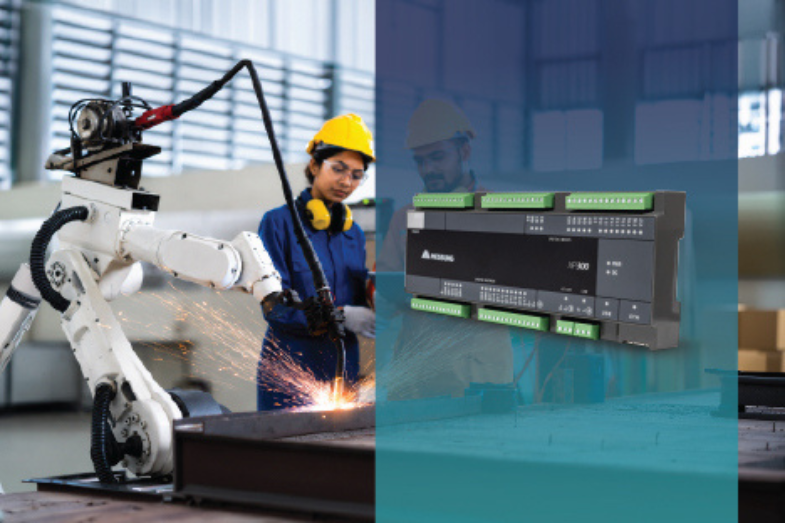
To address these challenges, Messung Automation implemented a control architecture centered around the NX-ERA XPRESS XP300 PLC.
The solution integrated CANOpen I/O modules and an intuitive HMI to create a centralized control platform for the entire robotic welding cell. The architecture streamlined machine coordination, enabled Real-time monitoring, and ensured smooth communication between robots, fixtures, sensors, and auxiliary equipment.The result was a connected automation environment capable of managing complex welding operations with precision and efficiency.
- Centralized Control for Seamless Operations
The NX-ERA XPRESS XP300 served as the central controller for the complete welding sequence and cell operations.
By bringing all critical processes under a single control platform, the PLC eliminated communication bottlenecks and improved synchronization across the production cell. Every device operated as part of a unified system, helping ensure accurate execution of welding cycles and consistent production output.
For manufacturers adopting PLC for automation, centralized control offers a significant advantage by reducing process variability and improving overall equipment effectiveness.
- Reliable Communication Through CANOpen
Modern manufacturing environments rely heavily on fast and dependable data exchange.
The implementation utilized CANOpen-based distributed I/O architecture to establish reliable communication between field devices throughout the welding cell. This enabled rapid data transfer between sensors, robots, actuators, and controllers while maintaining high system stability.
The use of CANOpen ensured that all connected devices operated in perfect coordination, reducing delays and improving overall process performance.
- Enhanced Visibility Through HMI and Real-Time Monitoring
Operator visibility is essential for maintaining production efficiency.
The integrated HMI provided operators with easy access to production parameters, machine diagnostics, alarms, and system status information. Instead of reacting to problems after they occurred, operators could proactively monitor system performance and respond quickly when required.
The implementation also introduced continuous Real-time monitoring of automated welding machines, sensors, and equipment status. This allowed production teams to track machine health, identify abnormalities early, and make informed operational decisions.
As manufacturers increasingly adopt IOT and IIOT technologies, real-time access to operational data has become a key driver of productivity and process optimization.
- Fault Detection & Diagnostics:
Faster troubleshooting through instant alarm notifications and system feedback.
One of the most valuable outcomes of the solution was improved fault management.
Instant alarm notifications and detailed system feedback enabled faster troubleshooting and corrective action. Problems that previously required lengthy investigation could now be identified and resolved quickly. This reduction in downtime translated directly into improved productivity, smoother cell operation, and better utilization of manufacturing assets.
- Delivering Measurable Results
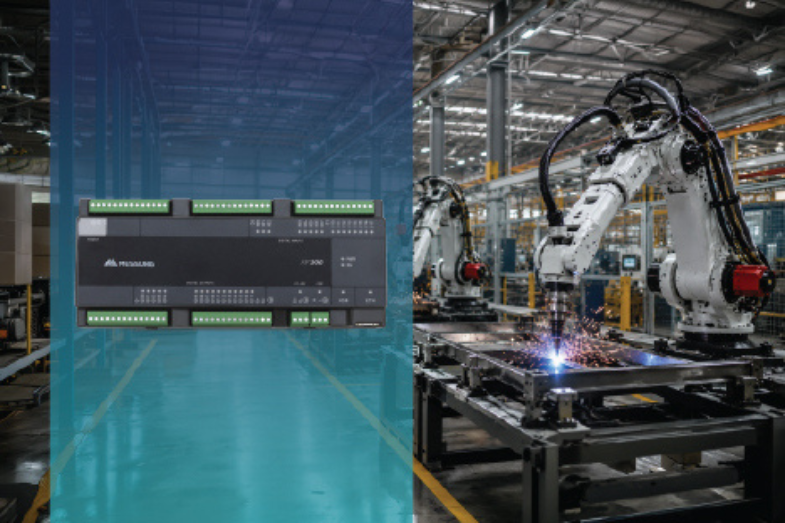
The NX-ERA XPRESS XP300-based automation solution delivered significant operational improvements across the welding process.
Weld quality became more consistent across production batches. Synchronization between robots and peripheral equipment improved considerably. Faster fault identification reduced production interruptions and enhanced overall reliability.
Real-Time Monitoring: Continuous monitoring of welding operations, sensors and equipment status.
Operators gained greater visibility and control over the welding process through the integrated HMI interface. Productivity increased while the welding cell operated more smoothly and efficiently. Perhaps most importantly, the scalable architecture supports future expansion and integration of additional devices, making it a future-ready solution for evolving manufacturing requirements.
Why Advanced PLC Automation Matters
Today’s factories demand more than simple machine control. They require intelligent systems capable of collecting data, enabling connectivity, and supporting continuous improvement.
As one of the trusted PLC manufacturers in India, Messung Automation understands the growing need for advanced control solutions that combine reliability with digital readiness.
By integrating Programmable Logic Controllers, IOT, IIOT, CANOpen, and intelligent Automation Systems, manufacturers can create connected production environments that improve quality, reduce downtime, and maximize operational efficiency.
Conclusion
The successful implementation of the NX-ERA XPRESS XP300 demonstrates how intelligent automation can transform complex manufacturing processes. Through centralized control, seamless device communication, advanced diagnostics, and Real-time monitoring, automotive manufacturers can achieve greater consistency, productivity, and operational excellence.
As industries continue to embrace digital transformation, choosing the right automation partner becomes critical. Messung Automation delivers innovative solutions designed to help manufacturers stay competitive in an increasingly connected world.