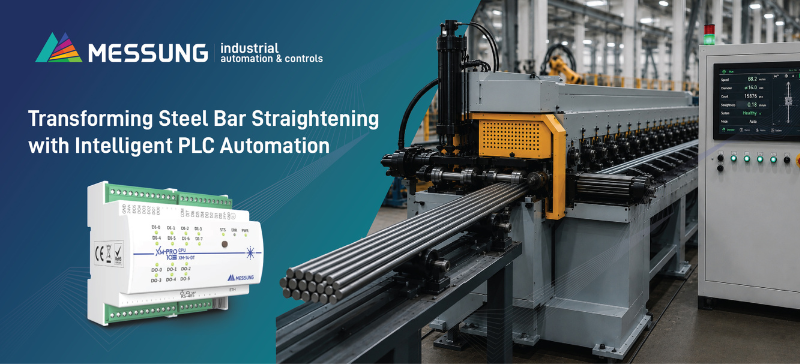
Why is precision becoming the defining factor in modern steel processing?
In today’s competitive manufacturing environment, quality and consistency are no longer optional. Industries that rely on steel bars for construction, infrastructure, automotive, and engineering applications demand products that meet stringent dimensional and performance standards. Even minor variations in straightness can affect downstream operations and product quality. This is where intelligent PLC for automation solutions are making a significant difference. By integrating advanced control technologies with IOT, IIOT, and modern automation systems, manufacturers can achieve greater precision, higher productivity, and improved operational efficiency.
The Growing Need for Automation in Steel Processing
Steel processing operations involve multiple stages that require accurate control and synchronization. Among these processes, steel bar straightening plays a critical role in ensuring product quality and usability.
Traditional straightening machines often depend heavily on manual intervention. Operators are required to make frequent adjustments based on bar diameter, material properties, and production requirements. While effective to a certain extent, manual operation can lead to inconsistencies, increased setup times, material wastage, and reduced productivity.
Modern manufacturers are increasingly adopting programmable logic controllers and intelligent machine controls to overcome these challenges. Advanced automation not only improves process consistency but also provides greater visibility into machine performance and production efficiency.
The Challenge: Maintaining Consistency and Control
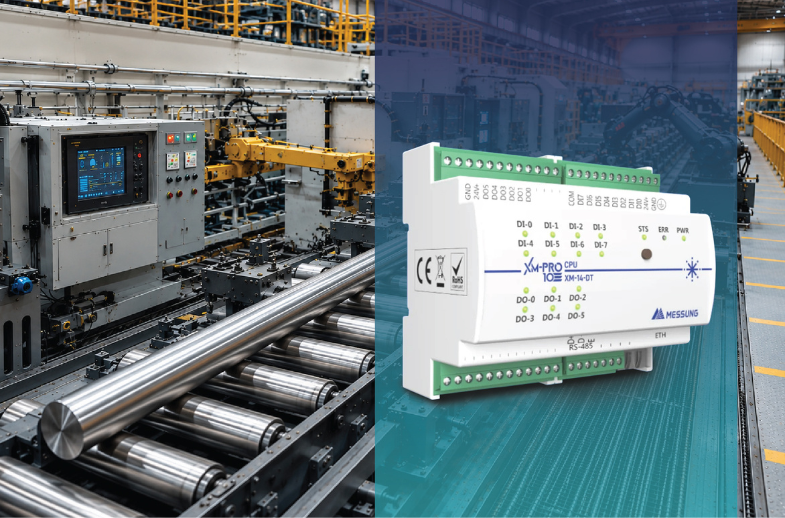
A leading steel bar straightening machine manufacturer sought to improve process consistency, reduce manual intervention, and achieve better operational control.
The customer faced several challenges during machine operation.
Variations in straightening quality often occurred due to manual adjustments. Machine speed control was difficult when processing different bar sizes. Setup and changeover times were longer than desired. Operators had limited visibility into machine status and fault conditions. Inconsistent processing also resulted in increased material wastage and rework.
The manufacturer needed a reliable automation solution that could improve machine performance while simplifying operation for plant personnel.
The Solution: XM-PRO 10 PLC-Based Automation
To address these challenges, Messung implemented an advanced automation solution centered around the XM-PRO 10 PLC.
The solution combined the XM-PRO 10 PLC with a Variable Frequency Drive (VFD) and an intuitive Human Machine Interface (HMI). Together, these technologies created a highly efficient control platform capable of managing machine operations with greater accuracy and flexibility.
The PLC handled machine sequencing and control while the VFD enabled smooth speed regulation for different steel bar diameters. The HMI provided operators with an easy-to-use interface for machine monitoring, diagnostics, and parameter adjustments.
This integrated architecture significantly improved process stability and operational efficiency.
Reliable Machine Control Through PLC Technology
At the core of the solution was the XM-PRO 10 PLC.
Modern programmable logic controllers serve as the central intelligence of industrial machines. They continuously monitor inputs, process logic and execute control actions with exceptional speed and reliability.
In the steel bar straightening machine, the XM-PRO 10 PLC ensured accurate machine sequencing and synchronized operation between various machine components. This resulted in more consistent straightening performance and reduced dependency on operator intervention.
As manufacturers continue adopting PLC for automation, they gain the ability to improve repeatability, reduce variability, and maintain tighter control over critical production processes.
Flexible Speed Control with VFD Integration
Different steel bar sizes require different processing speeds to achieve optimal straightening results.
The integration of a Variable Frequency Drive enabled smooth and precise speed control across varying production requirements. Operators could easily adjust machine performance based on material specifications without compromising quality.
This flexibility allowed manufacturers to process multiple product variants efficiently while maintaining consistent output quality.
The combination of PLC and VFD technology created a responsive control environment capable of adapting to changing production demands.
Enhanced Visibility Through HMI and SCADA Monitoring
One of the major advantages of modern automation systems is improved process visibility.
The integrated HMI provided operators with real-time access to machine parameters, performance indicators and diagnostic information. Setup changes became faster and easier while troubleshooting became significantly more efficient.
In larger manufacturing environments, these systems can also be integrated with SCADA monitoring platforms. Through this, production teams can view machine status, operational trends and performance metrics from centralized control stations.
This level of visibility helps improve decision-making, reduce downtime and enhance overall plant efficiency.
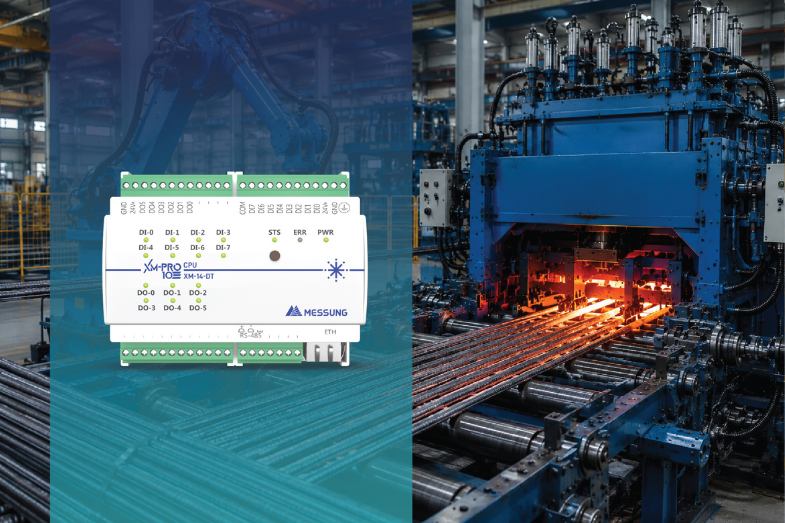
The manufacturing sector is rapidly moving toward connected operations powered by IOT and IIOT technologies.
Modern PLC platforms support seamless communication with connected devices, sensors and supervisory systems. Through industrial communication protocols such as Modbus, machines can exchange data efficiently across the production environment.
The use of Modbus enables reliable communication between PLCs, HMIs, drives, sensors, and higher-level control systems. This connectivity creates opportunities for data collection, performance analysis, predictive maintenance and continuous process improvement.
As manufacturers embrace IIOT, they gain access to valuable operational insights that help optimize machine performance and maximize productivity.
Improving Process Control Through Advanced Automation
Consistent product quality requires precise machine control.
The XM-PRO 10 PLC solution strengthens process control automation by ensuring accurate synchronization of machine functions and maintaining stable operating conditions throughout production cycles.
In many industrial applications, advanced PID controllers are used alongside PLC systems to maintain process variables within defined limits. Whether controlling speed, tension, temperature, or other parameters, PID controllers contribute significantly to process stability and operational efficiency.
Together, PLCs, VFDs, HMIs, communication networks, and intelligent control strategies form the foundation of modern process control automation.
Together, PLCs, VFDs, HMIs, communication networks, and intelligent control strategies form the foundation of modern process control automation.
The implementation of the XM-PRO 10 PLC-based solution delivered substantial improvements.
Straightening quality became more consistent across production batches. Better machine control reduced material rejection and rework. Faster setup and recipe changes improved operational flexibility. Operators gained better visibility into machine performance and fault conditions.
The system also improved productivity by simplifying machine operation and reducing downtime through quicker fault identification and troubleshooting.
Most importantly, the bar decoiling and straightening machine delivered reliable and repeatable performance, enabling the manufacturer to achieve higher throughput and better product quality.
Conclusion
Automation is transforming steel processing by enabling greater precision, consistency and efficiency. The successful implementation of the XM-PRO 10 PLC solution demonstrates how intelligent control technologies can significantly improve machine performance while reducing operational challenges.
By combining programmable logic controllers, IOT, IIOT, Modbus communication, PID controllers, SCADA monitoring and advanced process control automation, manufacturers can build smarter operations that deliver long-term value.
Looking to enhance machine performance and achieve greater production efficiency? Partner with Messung Automation and discover how intelligent automation solutions can help transform your manufacturing processes for a smarter and more productive future. For more information, visit us on www.messungautomation.co.in