

Fluid Bed Dryers (FBD) and Fluid Bed Processors (FBP) play a critical role in pharmaceutical automation and modern process automation environments. As essential equipment in the pharmaceutical drying process, they are widely used for granulation, drying, and coating applications where consistent moisture content and particle uniformity are mandatory. Any variation in temperature, airflow, or spray rate directly impacts product quality, batch consistency, and regulatory compliance.
To achieve repeatable and validated results, fluid bed dryer and fluid bed processor systems require precise and continuous control of inlet air temperature, exhaust temperature, airflow velocity, spray rate, and drying time. Manual or semi-automated operations struggle to maintain this level of control, particularly in regulated environments where real-time process monitoring and traceability are essential.
By deploying Messung’s NX-ERA XPRESS 315 or XPRESS 325 programmable logic controller, pharmaceutical manufacturers can implement a robust PLC-based control system for FBD and FBP machines. Integrated with an HMI, the PLC enables deterministic PLC automation of heating, air handling, and spraying operations while ensuring reliable data logging PLC functionality. This approach supports stable drying performance, repeatable batches, and documentation readiness aligned with pharmaceutical compliance requirements.
Challenges in Conventional FBD/FBP Systems
- Traditional FBD and FBP installations often rely on manual control or loosely integrated automation systems, leading to several operational challenges.
- Temperature instability frequently occurs due to manual damper adjustments or basic valve control without structured PID temperature control. Without a closed loop control system, managing temperature variations during extended drying cycles becomes difficult.
- Air velocity, a critical process parameter in the fluid bed dryer, is often monitored but not actively controlled. Lack of closed-loop airflow regulation results in poor fluidization, uneven drying, or particle loss.
- Subsystems such as blowers, heaters, and spray pumps typically operate independently rather than as a coordinated PLC control system, increasing the risk of process mismatch.
- Production traceability is limited when batch data, alarms, and trends are not captured through structured industrial automation platforms. This affects batch review, root cause analysis, and audit preparedness.
- Additionally, limited integration with a SCADA system or MES restricts centralized monitoring and reporting. As a result, drying outcomes depend heavily on operator experience, leading to batch-to-batch variability.
- Implementing a centralized PLC automation architecture addresses these limitations by unifying sensors, PID loops, and control outputs within a single industrial PLC environment.
System Architecture Overview
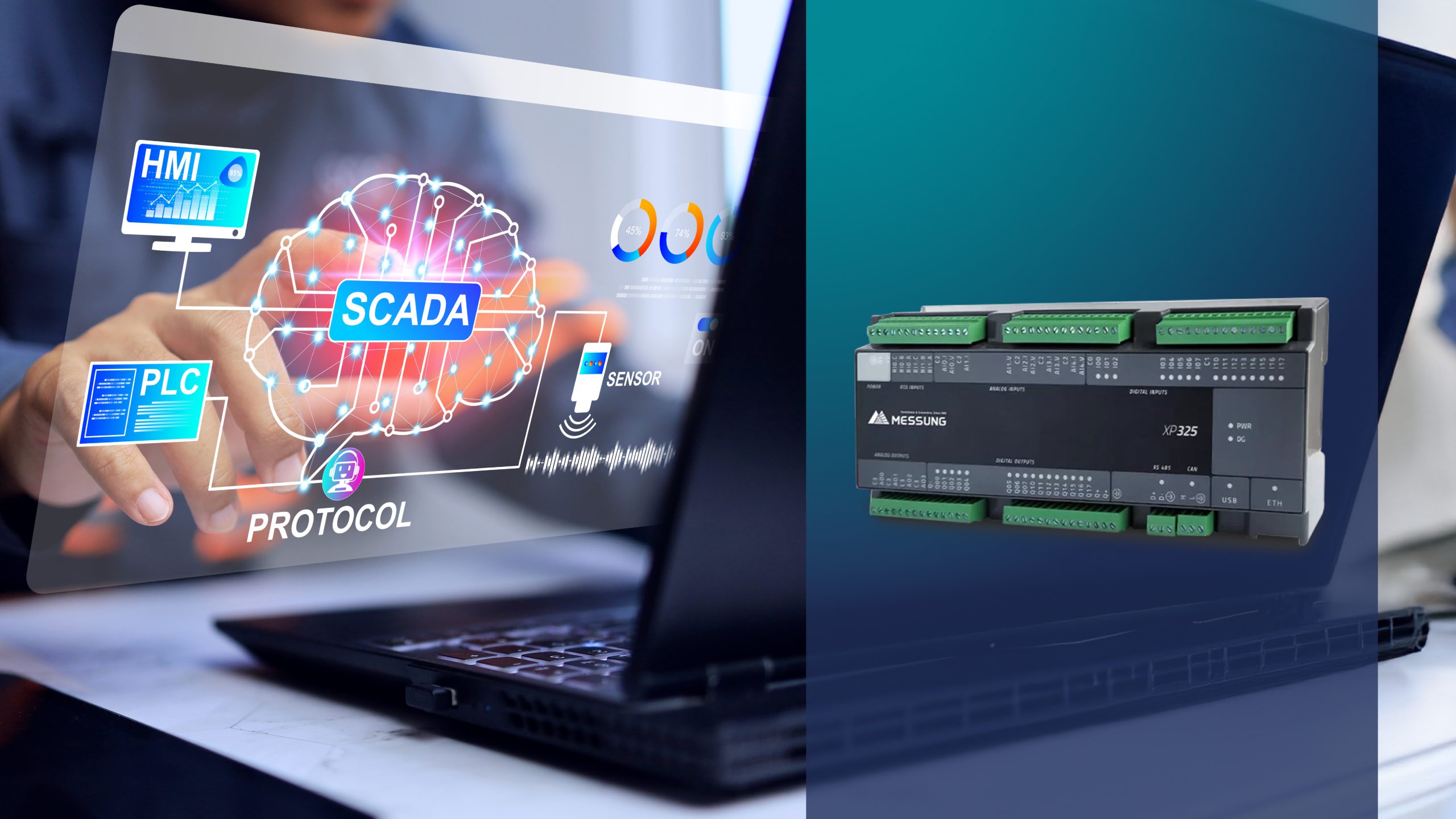
In an automated FBD or FBP installation, the XP-315 or XP-325 compact PLC functions as the central process controller. The PLC continuously monitors critical parameters such as inlet temperature, exhaust temperature, bed temperature, product temperature, and airflow velocity. These values are processed in real time to maintain stable and repeatable drying conditions. Based on sensor feedback, the PLC controls key components including the exhaust blower drive, steam control valve, peristaltic spray pump, and heater logic. All actions are coordinated within a unified PLC control system, eliminating isolated or manual operation.
Communication with field devices and external systems is achieved using Modbus for VFD control and OPC UA automation for higher-level connectivity with SCADA or MES platforms. This architecture ensures reliable field-level control while enabling centralized visibility, aligning with modern pharmaceutical automation practices.
Multi-Point Temperature Monitoring Using Built-In RTD and Analog Inputs
Accurate temperature measurement is fundamental to effective pharmaceutical drying process control. The XP-315 and XP-325 programmable logic controllers provide built-in RTD and analog inputs, enabling direct connection of temperature sensors without external signal conditioning. Multiple temperature points are monitored simultaneously. Inlet air temperature governs heating logic, exhaust temperature indicates drying end point, bed temperature ensures proper fluidization, and product temperature protects material quality.
The PLC processes these signals in real time and applies corrective actions using PID temperature control to regulate the steam valve or heater. This ensures thermal stability throughout the batch. Temperature trends and values are recorded through structured data logging PLC functions, supporting batch documentation, validation, and quality review.
Air Velocity Monitoring Using 4–20 mA Analog Input
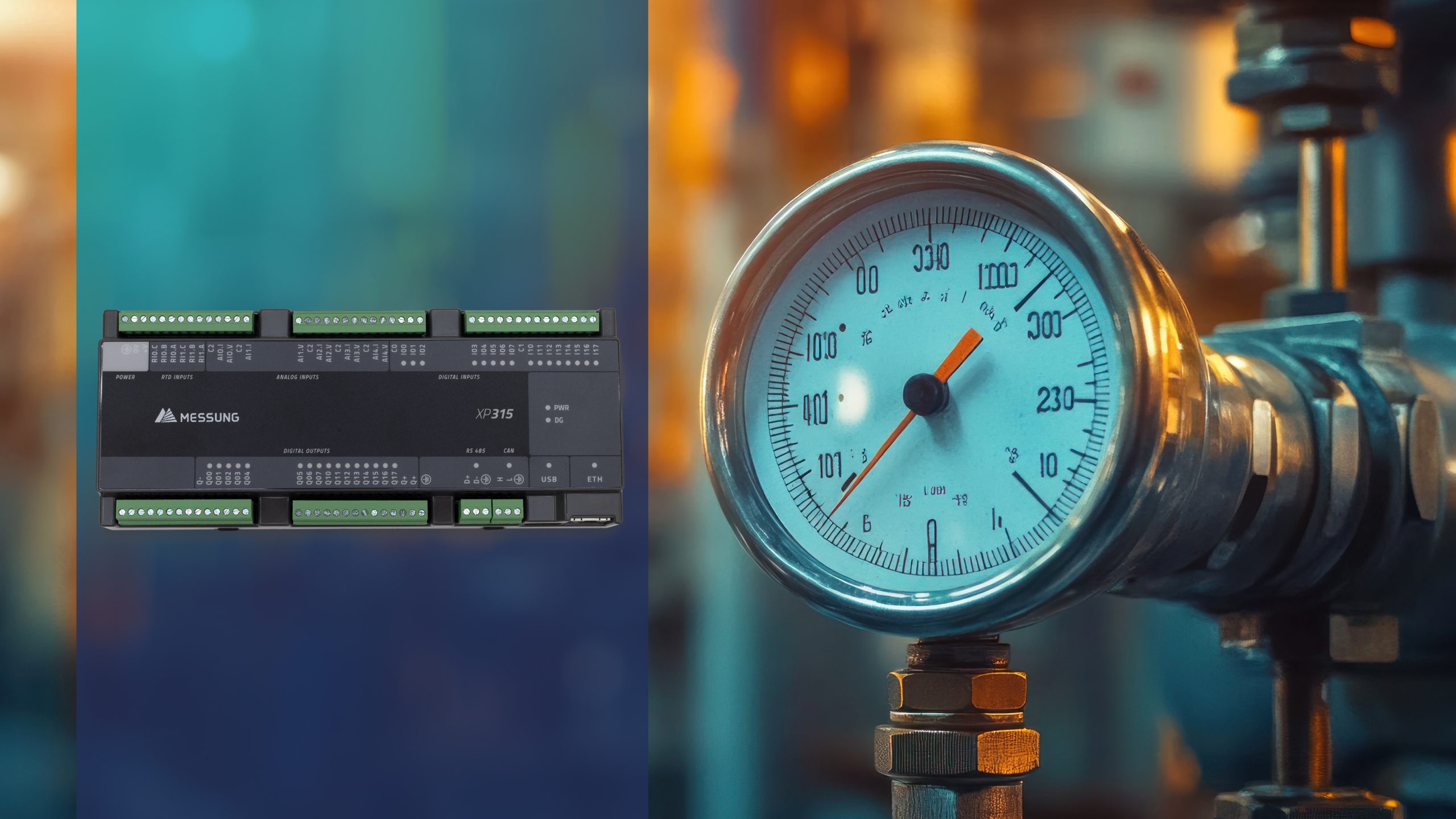
Maintaining correct airflow is essential for effective fluidization in a fluid bed processor. Insufficient airflow results in poor mixing, while excessive airflow can cause product loss. The XP-315 and XP-325 industrial PLCs receive airflow velocity signals via built-in analog inputs. These signals are continuously monitored as part of a closed loop control system. Based on real-time feedback, the PLC automatically adjusts blower speed to maintain stable airflow conditions throughout the drying or coating cycle. Airflow trends are logged for process verification and batch analysis, supporting compliance and operational consistency.
Exhaust Blower Drive Control Through VFD Integration
The exhaust blower plays a central role in airflow regulation and heat transfer within fluid bed dryer systems. The PLC controls the blower VFD using analog outputs for speed reference and Modbus communication for status, feedback, and alarms. This setup enables precise speed control, real-time fault detection, and adaptive airflow correction. Deviations such as overload, underload, or speed variation are identified immediately by the PLC automation logic, enabling corrective action and minimizing process disruption.
Steam Valve PID Control for Drying Temperature
Drying temperature is regulated using the XP-325’s built-in PID temperature control function on the CODESYS platform. The PID loop operates in a closed-loop configuration, continuously comparing actual temperature values against defined setpoints. Auto-tuning stabilizes the control loop by optimizing parameters based on process behavior. This approach compensates for ambient variations and batch load changes, preventing overheating or under-drying.
The result is stable thermal performance, repeatable drying cycles, and consistent energy utilization within the process automation framework.
Peristaltic Pump Control for Liquid Spraying
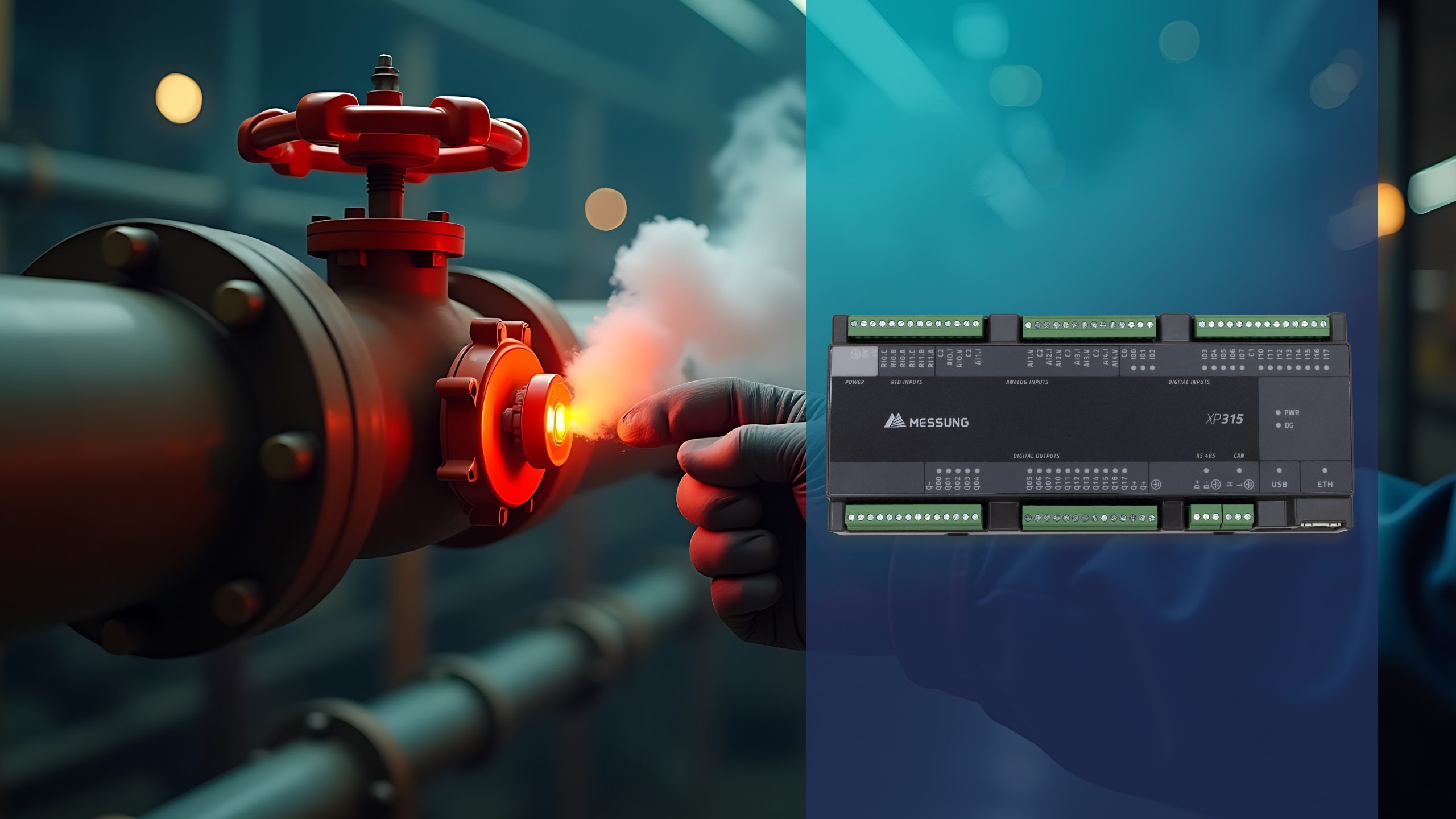
In Fluid Bed Processors, coating operations require precise peristaltic pump control to ensure uniform liquid application. The XP-315 and XP-325 PLCs control the pump using high-speed outputs to achieve accurate flow regulation. Pulse-based control ensures consistent spray rates, synchronized with airflow and temperature conditions. The PLC logic automatically stops spraying during abnormal conditions such as nozzle blockage or pressure loss, protecting product quality and maintaining process stability.
Real-Time Data Transfer Using OPC UA
The XP-315 and XP-325 PLCs support native OPC UA automation, enabling seamless integration with SCADA systems and MES platforms. Critical process data such as temperature trends, airflow values, batch details, alarm events, and equipment status are transferred in real time. This capability supports centralized monitoring, structured reporting, and digital documentation workflows. OPC UA connectivity ensures readiness for data-driven industrial automation environments where traceability and transparency are mandatory.
Benefits of XP-315 / XP-325 PLC in FBD/FBP Automation
Implementing Messung’s XP-315 and XP-325 programmable controllers in FBD and FBP systems provides:
- High-accuracy multi-point temperature monitoring
- Stable PID temperature control
- Closed-loop airflow regulation
- Coordinated blower, heater, and spray control
- OPC UA automation for Industry 4.0 readiness
- Robust industrial PLC hardware for pharmaceutical use
- Improved batch repeatability and validation support
These advantages directly improve product quality and reduce operational risk.
Conclusion
Automating Fluid Bed Dryers and Fluid Bed Processors using Messung’s NX-ERA XPRESS 315 and XPRESS 325 PLC control systems significantly enhances process stability, consistency, and compliance. Through precise control of temperature, airflow, steam valves, and spray systems, combined with real-time data integration, manufacturers achieve consistent product quality, reduced batch failures, and improved regulatory readiness.
This positions the XP-315 and XP-325 as reliable compact PLC solutions for modern, compliant, and data-driven pharmaceutical drying and processing operations.