The global automotive ecosystem continues to expand rapidly, creating a strong demand for efficient vehicle maintenance solutions. Among these, automatic car washing systems have emerged as an essential service for commercial car wash facilities, fuel stations, vehicle dealerships, and industrial fleet operators. These systems are designed to deliver consistent cleaning quality while optimizing water, chemical, and energy usage.
Automatic car washing systems are designed to deliver consistent cleaning quality while optimizing water, chemical, and energy usage. These systems involve multiple coordinated processes that must operate reliably in sequence.
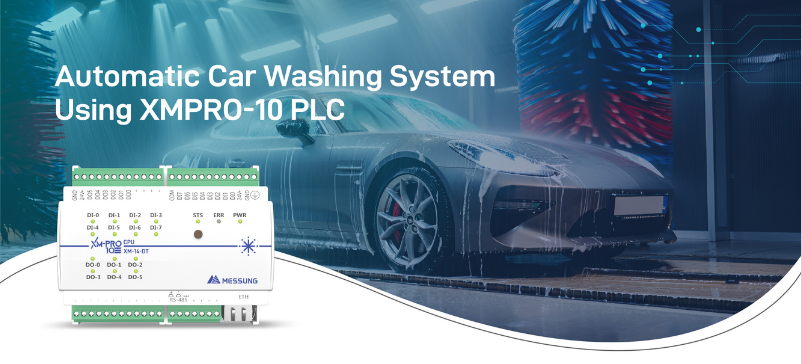
An Automatic Car Washing System controlled by Messung’s XMPRO-10 PLC ensures precise sequencing, efficient resource utilization, and smooth system operation in commercial and industrial environments.
In modern facilities, automation plays a vital role in ensuring operational efficiency and maintaining service quality. This is where PLC automation becomes indispensable. By using programmable controller technology such as Programmable logic controllers, car wash operators can automate complex washing sequences, monitor equipment performance, and minimize manual intervention.
With the growth of advanced automation systems, PLC-driven car washing solutions are becoming smarter, more reliable, and more cost-efficient. Today, both large facilities and small operators can adopt low cost PLC in India solutions to automate their car wash operations without significant infrastructure investment.
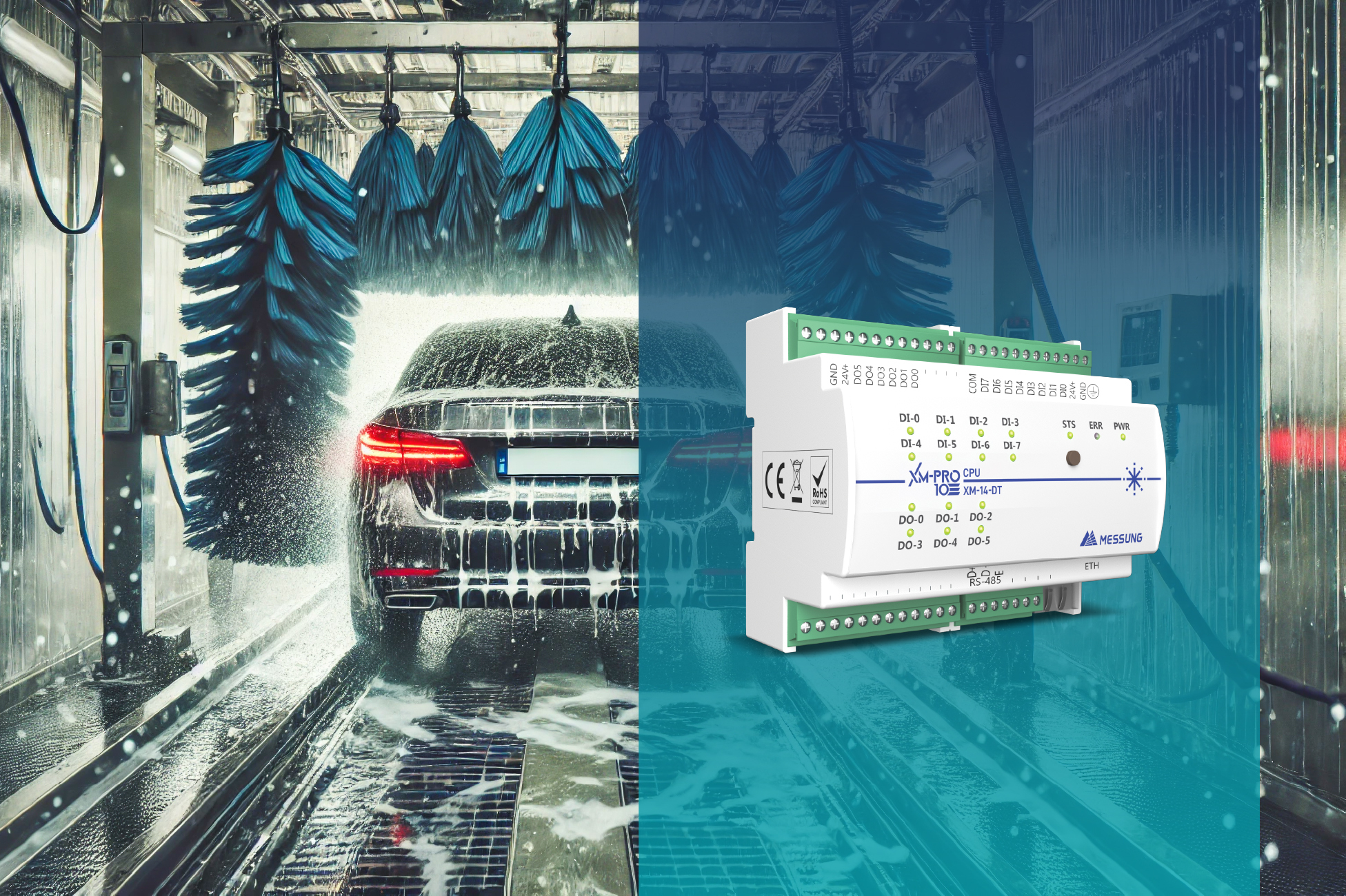
A modern car washing system consists of multiple electromechanical components including pumps, valves, conveyors, brushes, dryers, sensors, and chemical dosing systems. Managing all these devices manually can lead to inconsistencies and inefficiencies.
This is why most advanced car wash facilities rely on PLC for automation. A PLC-based control system can monitor inputs from sensors, execute programmed logic, and control outputs such as motors and pumps in a coordinated manner.
At the heart of this automation is the industrial PLC, a rugged and reliable device designed to operate in harsh industrial environments. Since car wash systems are constantly exposed to water, humidity, and detergents, using a robust industrial PLC ensures long-term reliability and uninterrupted operation.
Many automation engineers today prefer compact PLC or small PLC platforms for such applications because they provide high performance within a limited control panel space. These controllers also simplify wiring and system integration, making installation faster and more cost-effective.
As automation adoption grows, several PLC manufacturers in India are offering versatile solutions tailored for industries such as automotive service, manufacturing, packaging, andutilities. These controllers combine
reliability, flexibility, and affordability, making them ideal for small and medium-scale automation projects.
Why PLC Automation Is Critical for Car Wash Systems
Car wash systems operate continuously and are exposed to moisture, dust, and varying loads.
PLC-based automation ensures:
• Accurate timing and process coordination
• Consistent wash quality for every vehicle
• Reduced manual intervention
• Reliable fault handling and safety
The XMPRO-10 PLC delivers dependable control for continuous-duty applications.
In a typical car wash facility, multiple operations must occur sequentially and within precise time intervals. For example, water spraying must occur before detergent application, brushing must begin after foam coverage, and drying must only start after rinsing is complete.
Without PLC automation, coordinating these processes becomes extremely difficult. A well-designed PLC control system ensures that each stage of the wash cycle occurs at the correct time, preventing overlap and optimizing resource usage.
Furthermore, modern automation systems built around programmable logic controllers provide advanced safety mechanisms. If a sensor detects improper vehicle positioning or equipment malfunction, the PLC can immediately halt the operation and trigger alarms. This prevents equipment damage and enhances operational safety.
XMPRO-10 PLC – Centralized Control Architecture
The efficiency of an automated car wash system largely depends on its control architecture. The XMPRO-10 PLC acts as the central brain of the entire system, coordinating all mechanical and electrical components.
The PLC coordinates:
• High-pressure water pumps
• Detergent and chemical dosing systems
• Brush, conveyor, and roller motors
• Dryers, blowers, and safety interlocks
All components operate under a synchronized PLC-controlled sequence.
Using a centralized PLC control system, the car wash facility can ensure seamless interaction between different equipment modules. Sensors installed across the washing bay continuously send signals to the programmable controller, which processes the data and executes the required actions.
Depending on the system size, engineers may deploy different PLC configurations. For smaller installations, a Micro PLC, mini PLC, or small PLC can efficiently handle the required control functions. These controllers offer reliable performance while keeping costs low.
For medium-scale facilities, a compact PLC is often preferred because it combines high processing capability with a space-saving design. In contrast, large car wash facilities handling heavy vehicle traffic may require Modular PLC systems that allow expansion through additional input-output modules.
Such flexibility enables engineers to design scalable automation systems capable of handling future upgrades and expansions.
Automated Wash Cycle Control
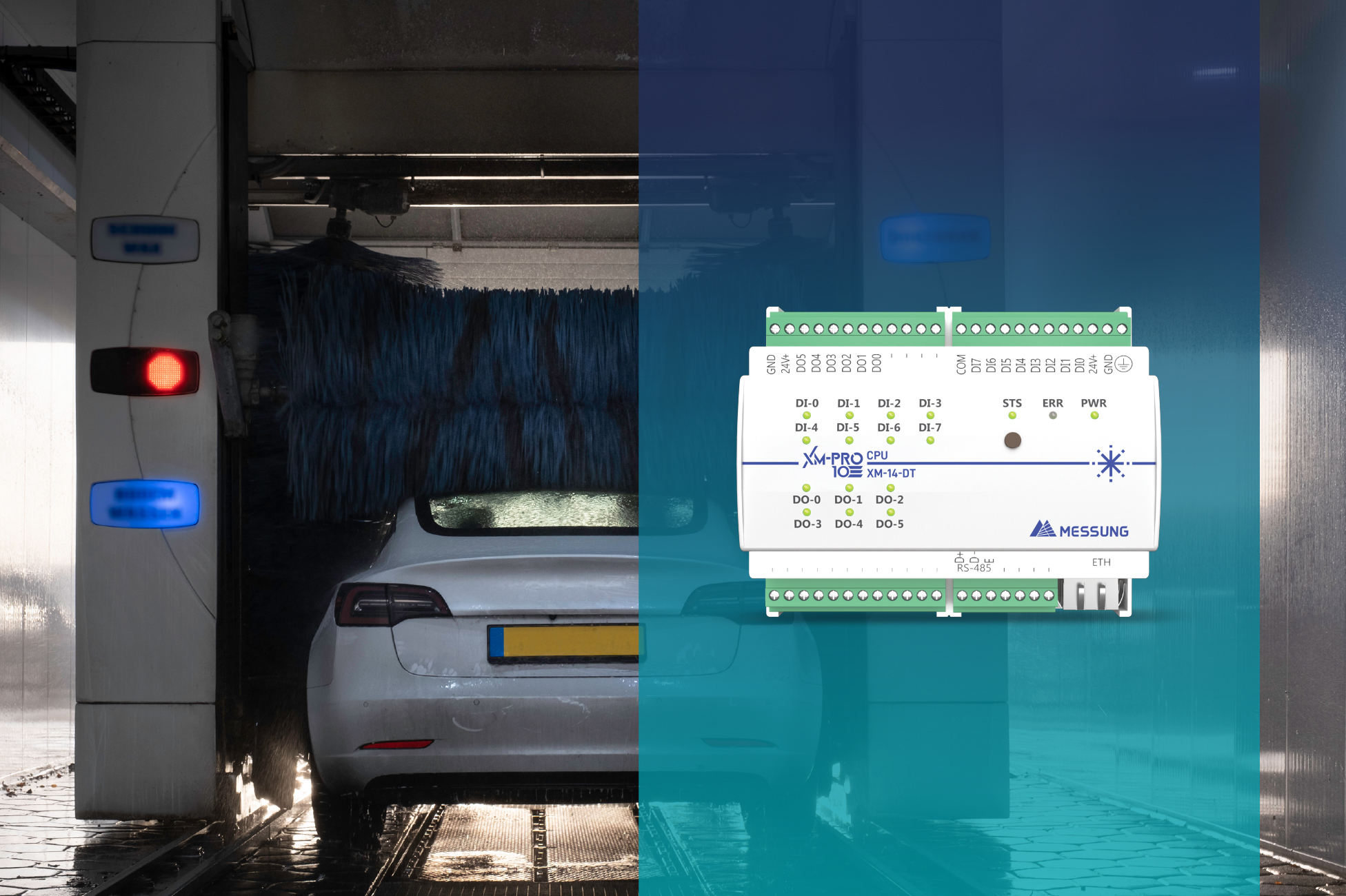
Automation becomes most visible during the car wash cycle itself. The PLC executes a programmed sequence that controls each stage of the washing process.
Typical automated wash cycle stages include:
- Vehicle detection and positioning
• Pre-wash and foam application
• Brushing and scrubbing stages
• Final rinse and drying
• Fault detection and alarm handling
This ensures uniform wash quality and reduced resource wastage.
At the beginning of the cycle, sensors detect the vehicle entering the washing bay. The PLC for automation verifies vehicle positioning before activating the conveyor or guiding mechanism.
Next, the pre-wash phase begins, where high-pressure water jets remove loose dirt and debris from the vehicle surface. The PLC then activates detergent dosing units that apply foam evenly across the vehicle.
During the brushing stage, rotating brushes and rollers are activated under precise PLC control. The industrial PLC regulates brush speed, direction, and duration to ensure effective cleaning without damaging the vehicle surface.
After scrubbing, the PLC initiates the final rinse process using clean water. Once rinsing is complete, powerful blowers activate to remove moisture from the vehicle surface.
Throughout this process, the PLC control system continuously monitors sensors and equipment status. If any abnormal condition occurs, the system triggers alarms and safely stops the operation.
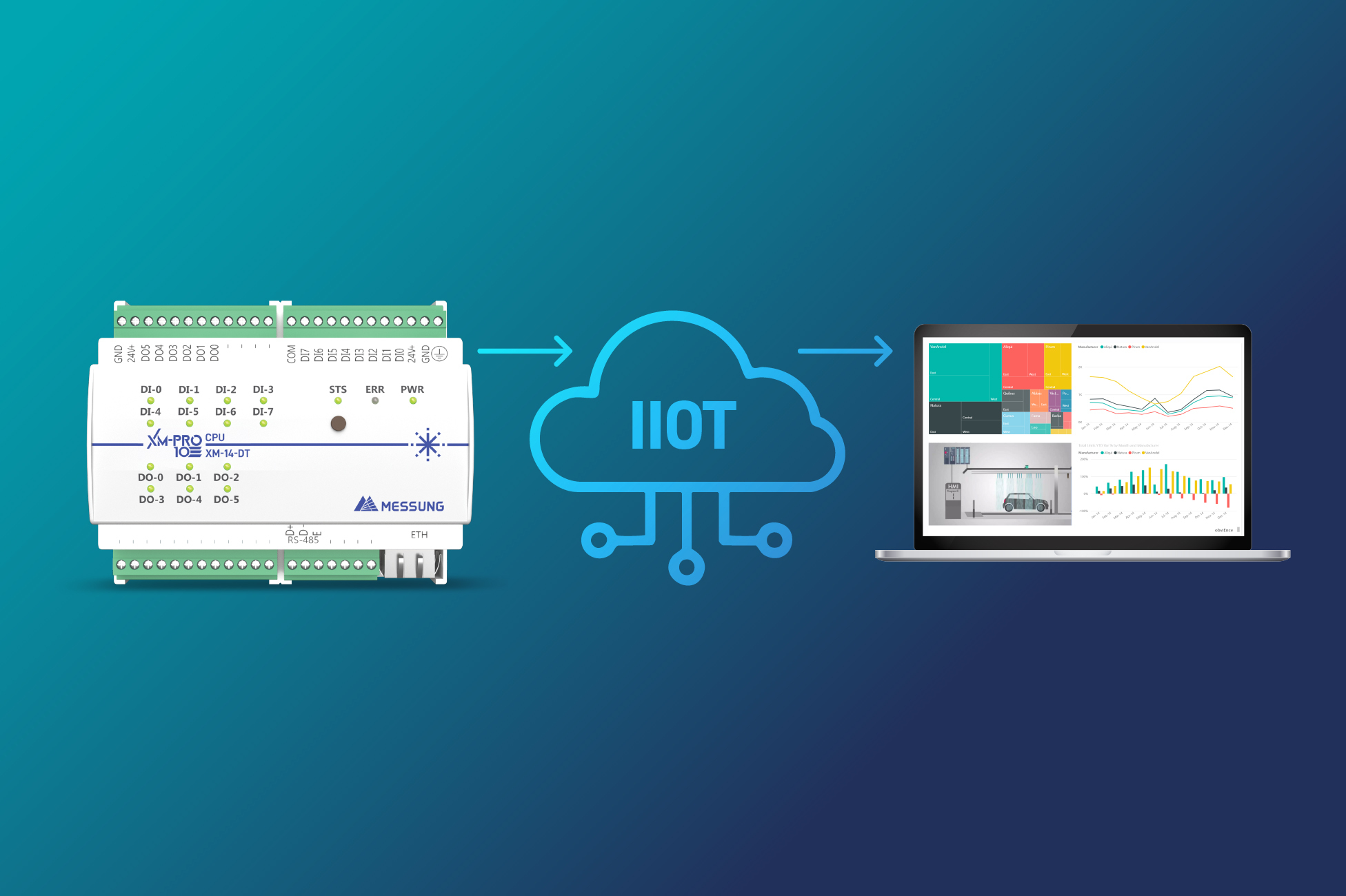
Integration with IIOT and IOT Technologies
Modern automation is no longer limited to local machine control. With the rise of IIOT and IOT, industrial equipment can now communicate with remote monitoring platforms and data analytics systems.
Integrating IOT with PLC automation allows car wash operators to monitor system performance in real time. Operational data such as pump usage, water consumption, wash cycle duration, and equipment health can be transmitted to cloud-based dashboards.
This integration enables facility managers to track productivity, optimize resource usage, and reduce operational costs.
Through IIOT connectivity, predictive maintenance also becomes possible. Data collected from sensors and motors can be analyzed to identify wear patterns and detect potential failures before they occur.
By combining Programmable logic controllers with IOT-enabled automation systems, businesses can achieve smarter operations, higher reliability, and improved efficiency.
Cost-Effective Automation with PLC Solutions
One of the major advantages of modern PLC technology is accessibility. Earlier, automation systems were expensive and limited to large industrial facilities. Today, the availability of low cost PLC in India has made automation affordable even for small service businesses.
Controllers such as mini PLC, Micro PLC, and small PLC provide essential automation features while keeping costs manageable. These controllers are ideal for applications like car washing systems where control requirements are moderate but reliability is crucial.
Several PLC manufacturers in India now offer low cost PLC platforms that are specifically designed for local industrial applications. These controllers provide features such as high-speed processing, multiple input-output options, and easy programming capabilities.
Whether using a compact PLC for medium-scale facilities or a Modular PLC for large installations, operators can choose a solution that best fits their operational requirements and budget.
Key Benefits
The adoption of PLC-based automation in car washing systems provides numerous operational advantages.
- Consistent and repeatable wash results
• Optimized water and chemical consumption
• Reduced maintenance through controlled operation
• Higher vehicle throughput
• Scalable system design
With a reliable PLC control system, operators can ensure uniform cleaning quality for every vehicle regardless of size or condition. Automated timing and precise dosing reduce unnecessary water and chemical usage, making operations more sustainable.
Controlled operation also reduces equipment stress and wear, lowering maintenance costs and increasing equipment life. Since the programmable controller manages the entire washing process automatically, staff requirements are reduced while operational efficiency improves.
Moreover, PLC-driven automation systems allow easy expansion. As business grows, additional modules or equipment can be integrated into the system without major redesign.
Conclusion
Automation is transforming the vehicle cleaning industry by improving efficiency, reliability, and service quality. By integrating intelligent control technology, modern car wash facilities can achieve consistent performance while optimizing resources.
An XMPRO-10 PLC-based car washing system delivers efficient, safe, and reliable automation, making it ideal for commercial car wash facilities and industrial vehicle cleaning operations.
With the adoption of PLC automation, businesses can leverage the capabilities of industrial PLC, compact PLC, Micro PLC, and Modular PLC platforms to build scalable and cost-effective automation solutions.
The availability of low cost PLC in India, along with innovations from leading PLC manufacturers in India, is further accelerating automation adoption across industries. Combined with emerging technologies such as IIOT and IOT, Programmable logic controllers will continue to play a critical role in shaping the future of intelligent automation systems.