
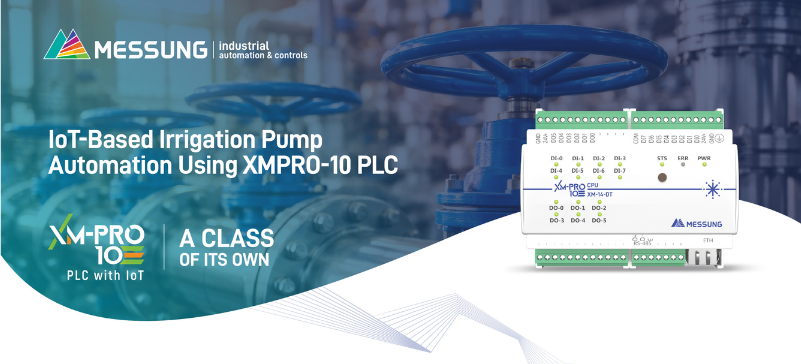
Water scarcity, rising energy costs, and the urgent need for sustainable agriculture have accelerated the global adoption of intelligent irrigation technologies. Traditional farming methods that rely on manual intervention or fixed irrigation schedules are no longer sufficient in a world where water resources must be managed with precision. Climate variability, unpredictable rainfall patterns, and increasing groundwater depletion demand smarter systems that can optimize water usage without compromising crop health.
An IoT-Based Irrigation Pump System powered by the XMPRO-10 PLC from Messung delivers reliable PLC automation, accurate sensor integration, and seamless connectivity with monitoring platforms. Designed for industrial-grade performance, the XMPRO-10 PLC ensures stable operation even in remote agricultural fields and harsh outdoor environments. By combining industrial PLC reliability with IoT automation capabilities, this solution bridges the gap between traditional agriculture and modern data-driven farming practices.
Smart irrigation system deployment today goes beyond simple automation—it involves intelligent decision-making based on real-time soil, weather, and water availability data. By leveraging Programmable logic controllers, farmers and agri-enterprises can achieve consistent irrigation control, optimized pump operation, and long-term sustainability.
Why PLC-Based Automation Is Essential for Smart Irrigation
Conventional irrigation systems often rely on manual switching, mechanical starters, or timer-based controls. These approaches frequently result in over-irrigation, dry running of pumps, excessive energy consumption, and inconsistent water distribution. Over time, such inefficiencies increase operational costs and reduce pump life.
A PLC control system eliminates these drawbacks by introducing deterministic and logic-driven operation. A PLC for automation enables:
- Automated pump operation based on soil moisture and water availability
• Intelligent scheduling aligned with crop type and climatic conditions
• Reliable protection against dry run, overload, and low-pressure faults
• Reduced dependency on manual supervision
• Seamless integration with SCADA monitoring platforms
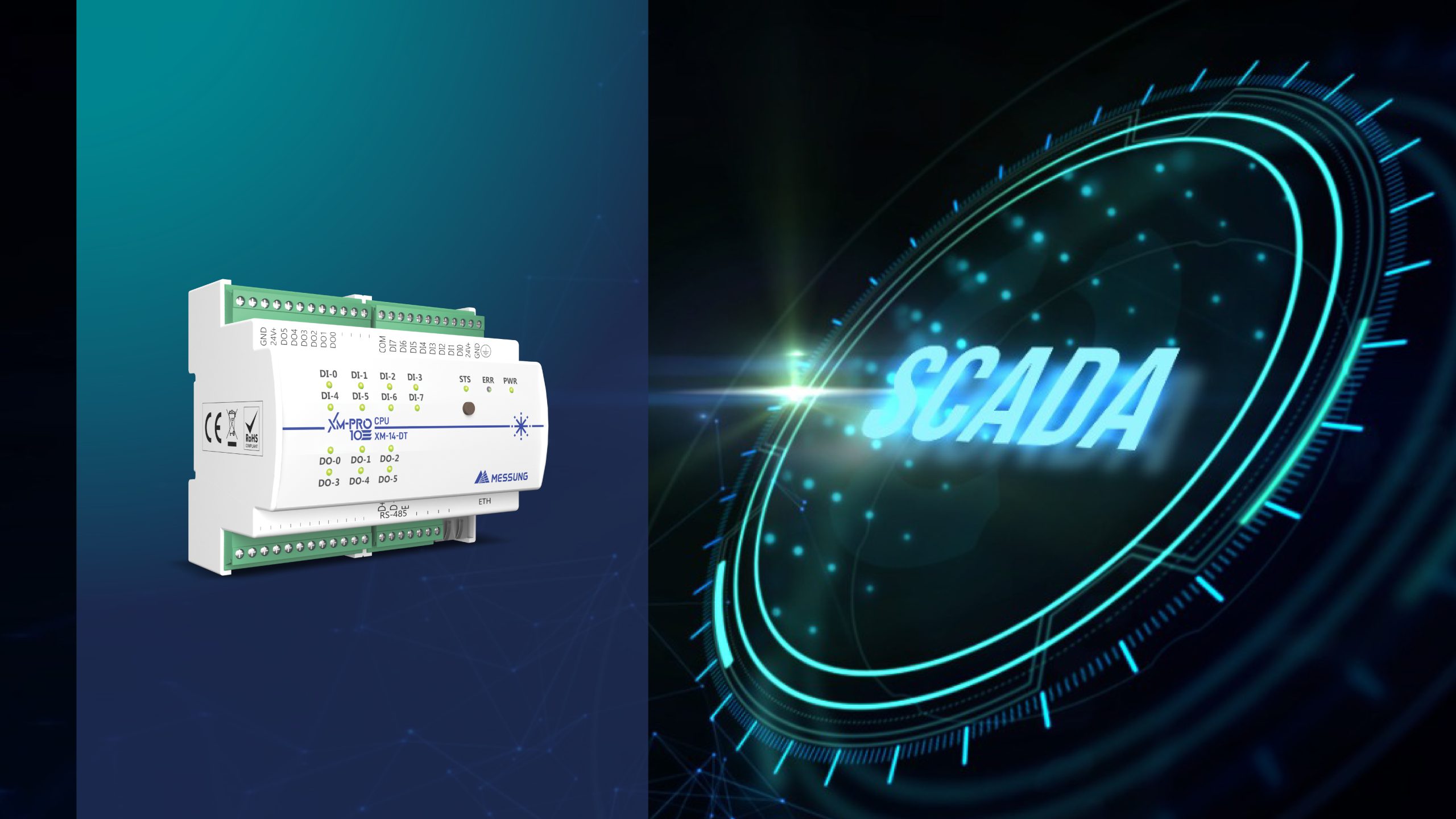
Unlike relay-based panels, an industrial PLC executes control logic with high precision and repeatability. Deterministic processing ensures that irrigation cycles start and stop exactly when required. In remote agricultural installations where supervision may not always be available, a robust compact PLC ensures uninterrupted performance.
Farmers adopting IoT automation increasingly prefer programmable controller solutions that combine ruggedness with connectivity. Compared to consumer-grade controllers, industrial-grade Programmable logic controllers are designed for voltage fluctuations, temperature variations, and dust-prone environments common in rural fields.
XMPRO-10 PLC – Robust Control Backbone for Irrigation Systems
The XMPRO-10 PLC is engineered for continuous-duty industrial applications and is particularly well suited for distributed irrigation infrastructure. Whether deployed in a single borewell pump system or across multiple zonal irrigation networks, this compact plc delivers reliable performance.
It manages:
- Pump start/stop sequencing
• Valve and solenoid control for zonal irrigation
• Alarm and fault handling
• Interface with IoT gateways, HMIs, or SCADA systems
As a small plc with modular design capabilities, it offers flexibility for system expansion. In large farms or agro-industrial estates, irrigation coverage often increases over time. The scalable architecture of this Modular plc ensures additional I/O modules can be integrated without redesigning the entire Automation system.
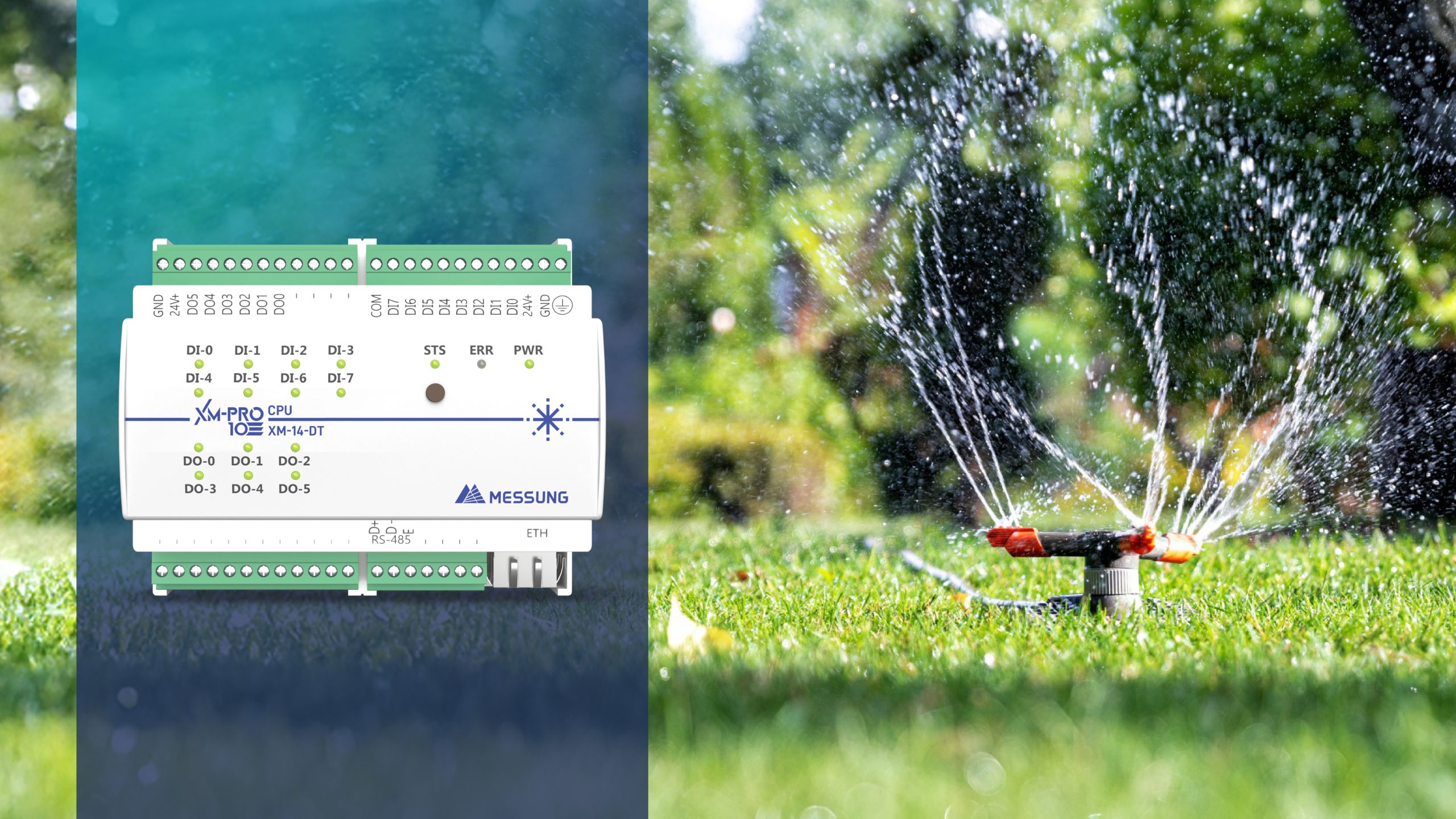
Its design also makes it suitable as a mini plc or Micro Plc in decentralized installations. For example, in orchards spanning multiple acres, each irrigation zone can be controlled by a compact PLC node communicating with a central monitoring station. This distributed intelligence enhances reliability and simplifies maintenance.
Sensor Integration and Data-Driven Control Logic
Modern smart irrigation system design depends heavily on real-time field data. The XMPRO-10 PLC integrates seamlessly with a variety of field sensors, enabling Process control automation tailored to crop requirements.
The PLC interfaces with:
- Soil moisture sensors for irrigation demand assessment
• Water level sensors for tank and borewell monitoring
• Flow and pressure transmitters for pipeline health
• Ambient temperature and humidity sensors
• Rain sensors for weather-based decision making
Using PLC automation logic, irrigation is activated only when soil moisture drops below predefined thresholds. If rain is detected or soil saturation levels are adequate, irrigation is automatically postponed. This prevents water wastage and ensures energy-efficient pump automation.
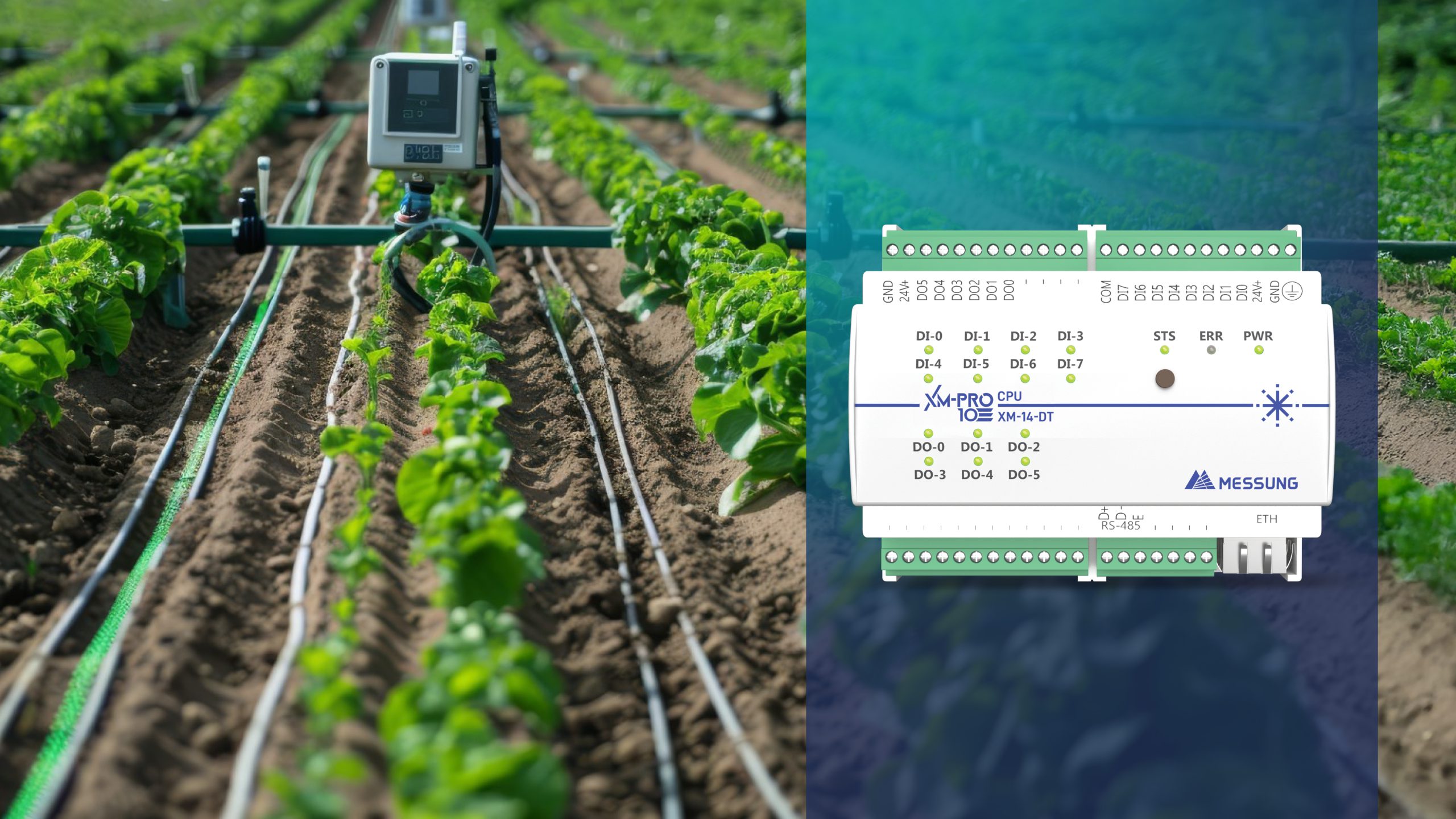
For instance, in drip irrigation systems used for vegetable farming, precise moisture control is crucial. Overwatering can damage roots, while underwatering affects yield. An industrial PLC processes continuous feedback and dynamically adjusts irrigation cycles, ensuring balanced moisture levels. This form of data-driven Process control automation directly impacts productivity and sustainability.
IoT Integration and Remote Monitoring
The integration of IIOT and IOT technologies transforms conventional irrigation into a connected ecosystem. When linked to cloud-based platforms, the XMPRO-10 PLC enables real-time monitoring and control from remote devices.
IoT automation allows:
- Remote monitoring of pump status and irrigation cycles
• Data logging for water usage analysis
• Alerts for dry run, low pressure, or power failure
• Historical trend analysis for crop planning
• Integration with SCADA monitoring dashboards
In large agricultural cooperatives or agribusiness operations, centralized SCADA monitoring provides a unified overview of multiple irrigation sites. Supervisors can monitor pump health, tank levels, and energy consumption across locations from a single control room.
For example, a sugarcane farm spread across multiple borewells can deploy compact PLC units at each site. Through IoT connectivity, data is aggregated into a central platform, enabling optimized scheduling based on water availability and electricity tariffs. This intelligent coordination significantly reduces operational costs.
Pump Protection and Energy Optimization
Pump automation is not only about switching motors on and off. Protecting the pump from damage is equally critical. Dry running due to low water levels can cause severe motor damage. Voltage fluctuations can lead to overheating. Excessive pressure can burst pipelines.
The XMPRO-10 PLC’s protective logic includes:
- Dry run detection using water level sensors
• Overload and overcurrent monitoring
• Low-pressure and high-pressure alarms
• Controlled soft start and shutdown sequences
By implementing structured PLC control system logic, the solution enhances pump life and reduces maintenance frequency. Energy optimization is another significant benefit. Pumps operate only when required, avoiding unnecessary runtime. This is particularly important in regions where electricity tariffs are high or supply is limited to specific hours.
Compared to basic relay-based panels, a low cost plc in India like the XMPRO-10 delivers advanced protection at an affordable investment, making it accessible even to medium-scale farmers.
Scalability and Modular Expansion
Agricultural infrastructure evolves over time. A farmer may begin with a single irrigation pump but later expand into multiple zones or adopt fertigation systems. The modular architecture of the XMPRO-10 supports such growth.
As a Modular plc, it allows expansion modules for additional digital and analog inputs and outputs. This means new sensors, valves, or pumps can be integrated seamlessly. The same programmable controller platform can manage expanded irrigation layouts without requiring a complete control panel redesign.
This scalability makes the system future-ready, supporting precision agriculture initiatives and advanced Process control automation strategies.
Industrial Reliability in Rural Environments
Agricultural fields often present challenging environmental conditions—high temperatures, dust, humidity, and voltage instability. An industrial PLC is specifically designed to withstand such environments. Unlike consumer-grade IoT controllers, industrial-grade Programmable logic controllers offer rugged hardware, stable firmware, and predictable performance.
The XMPRO-10, as a compact PLC, provides this industrial resilience while maintaining ease of deployment. Its durability ensures long-term system stability, even in unattended or remote installations.
Role of PLC Manufacturers in India
The growing demand for automation in agriculture has encouraged leading PLC manufacturers in India to develop cost-effective and application-specific solutions. Locally manufactured PLC for automation platforms provide faster service support, customization options, and compatibility with regional power standards.
By selecting a reliable low cost plc solution backed by domestic expertise, farmers and irrigation contractors gain access to technical assistance and spare parts availability. This strengthens adoption of Automation systems across rural landscapes.
Integration with Broader Smart Farming Ecosystems
Beyond pump automation, modern smart irrigation system architecture can integrate with fertigation units, weather forecasting APIs, and crop management software. IoT automation platforms can correlate irrigation data with crop yield outcomes, enabling predictive analytics.
For instance, vineyard management systems in semi-arid regions can combine soil moisture data with weather predictions to optimize watering schedules. A small plc controlling localized irrigation zones can communicate with centralized SCADA monitoring platforms, creating a fully synchronized agricultural automation network.
Such integration transforms irrigation from a reactive activity into a strategic, data-driven operation aligned with sustainable farming objectives.
Key Technical and Operational Benefits
The implementation of IoT-based irrigation pump automation using XMPRO-10 PLC delivers multiple benefits:
- Optimized water and energy usage
• Reliable automation for remote agricultural locations
• Improved pump life and reduced maintenance
• Scalable architecture for future expansion
• Supports sustainable farming practices
• Enables SCADA monitoring and centralized oversight
• Enhances crop yield consistency through precise moisture control
• Reduces human error through deterministic PLC automation
Each of these benefits contributes to long-term agricultural productivity and environmental conservation.
Conclusion
An IoT-based irrigation pump system using XMPRO-10 PLC combines industrial reliability with smart control logic, enabling efficient water management and higher agricultural productivity. By integrating PLC automation, process control automation principles, and IIOT connectivity, the system transforms conventional irrigation into a data-driven Smart irrigation system.
The XMPRO-10 stands out as a compact PLC that delivers the performance of a larger industrial PLC while maintaining affordability as a low cost plc in India. Its modular design