
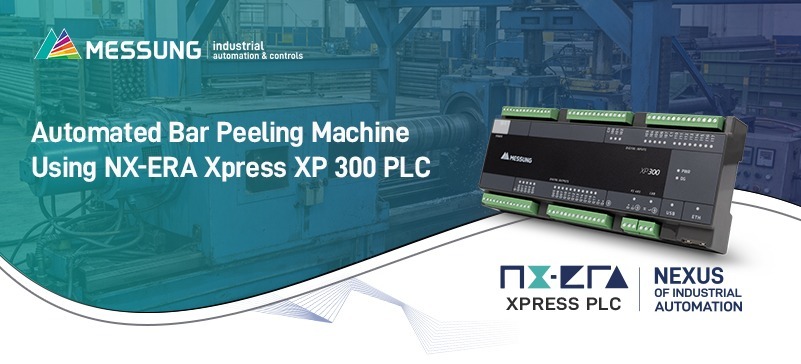
In modern manufacturing, precision and consistency are non-negotiable, especially in processes like bar peeling, where surface quality directly impacts final product performance. An automated bar peeling machine powered by the NX-ERA XP 300 PLC along with CANopen Remote I/O modules brings the right balance of control, speed, and reliability to the shop floor. As industries rapidly adopt advanced manufacturing technology, the integration of PLC automation and intelligent communication systems has become a cornerstone of efficient operations.
The bar peeling machine plays a crucial role in removing surface defects and ensuring dimensional accuracy in metal bars. The bar peeling operation is particularly important in industries such as automotive, construction, and heavy engineering, where high-quality materials are essential. By leveraging industrial automation solutions, manufacturers can significantly enhance productivity while maintaining consistent quality standards.
The Growing Importance of Automation in Manufacturing
The rise of automation in the manufacturing industry has transformed traditional production methods into highly efficient automated production systems. With increasing competition and demand for precision, industries are turning to industrial automation systems to stay ahead.
A programmable controller, commonly known as programmable logic controllers, is at the heart of these systems. These controllers enable seamless coordination between various machine components, ensuring accurate and repeatable operations. The use of industrial PLC and compact PLC solutions has made it easier to implement automation even in space-constrained environments.
In India, the adoption of automation is accelerating, driven by the availability of low cost PLC in India and the growing presence of industrial automation companies India. These advancements are making automation accessible to both large enterprises and small-scale industries.
System Overview and Working Principles
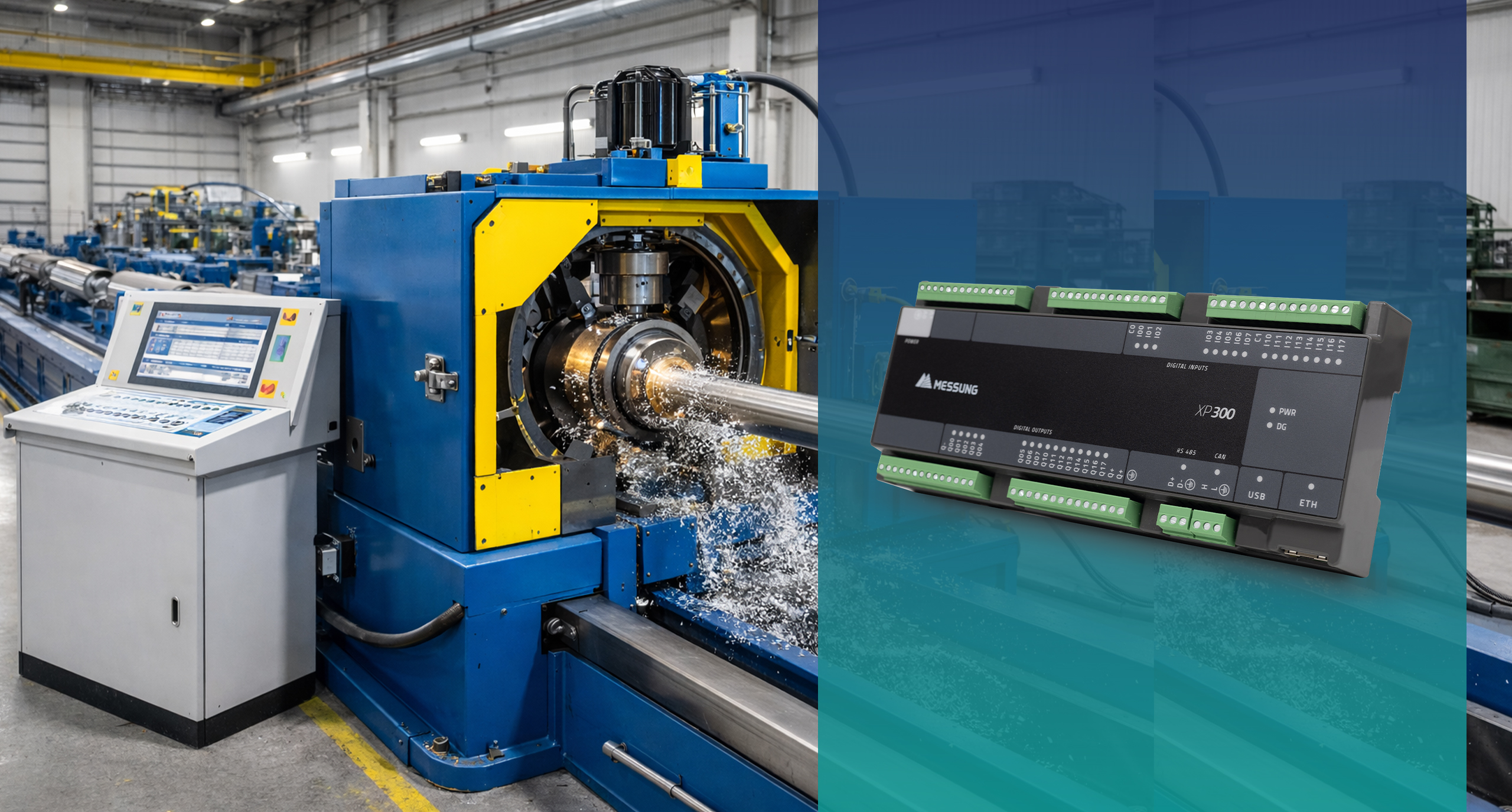
At the heart of the system, the XP 300 PLC manages the entire operation, from bar feeding to peeling and final output handling. It ensures that every stage runs in sync, maintaining accurate control over cutting depth, feed rate, and machine movement. This results in a uniform finish and reduced material wastage.
The automated process begins with feeding raw bars into the bar peeling machine. Sensors detect the position and alignment of the bar, ensuring correct placement before the peeling operation begins. The PLC control system then activates the cutting tools and regulates the movement of the bar.
During the bar peeling operation, the system continuously monitors parameters such as speed, pressure, and tool engagement. This real-time monitoring allows the PLC automation system to make instant adjustments, ensuring optimal performance and preventing defects.
The integration of automation systems ensures that the entire process runs smoothly, minimizing downtime and maximizing output.
Role of CANopen Remote I/O Modules
The use of CANopen-based Remote I/O modules makes the system more flexible and efficient. Since inputs and outputs are distributed across the machine, these modules help reduce complex wiring and allow faster communication between sensors, actuators, and the PLC.
A modular PLC architecture enhances scalability, allowing manufacturers to expand their systems without significant modifications. This flexibility is crucial in modern industrial automation systems, where adaptability is key.
Remote I/O modules also improve system diagnostics by providing localized data, enabling quick identification of faults. This reduces maintenance time and enhances overall system reliability.
Key Functional Highlights
Centralised Machine Control
NX-ERA XP 300 PLC ensures precise coordination of all machine operations. As a programmable controller, it manages inputs and outputs efficiently, forming the backbone of the PLC control system.
Distributed I/O Architecture
CANopen remote I/O reduces wiring complexity and improves scalability. This modular PLC approach supports easy upgrades and integration with other automation systems.
Real-time Monitoring
Continuous feedback from sensors ensures accurate peeling and positioning. The integration of IOT and IIOT enables enhanced monitoring and data analysis.
Optimised Performance
Controlled feed rate and cutting depth ensure a consistent surface finish. The use of compact PLC, mini PLC, or small PLC configurations allows efficient operation.
Safety & Interlocks
Built-in safety mechanisms protect both the machine and operators. Industrial control systems ensure immediate response to abnormal conditions.
Reduced Downtime
Faster diagnostics and simplified maintenance reduce downtime. This improves productivity in automated production systems.
Integration with IOT and IIOT
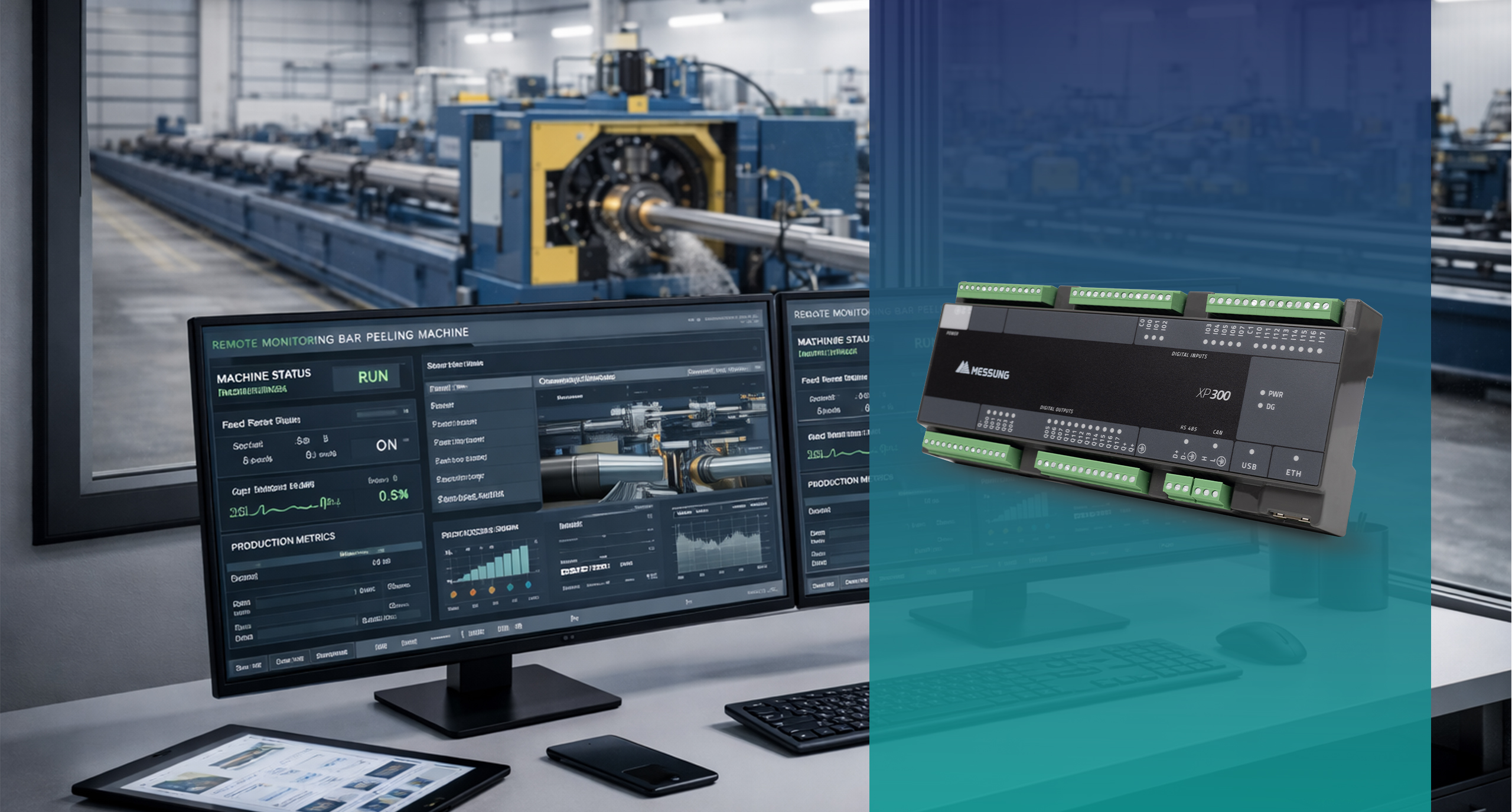
The incorporation of IOT and IIOT technologies is transforming traditional machines into intelligent industrial automation solutions. An IOT-enabled bar peeling machine allows operators to monitor performance remotely and receive real-time updates.
PLC with IIOT capabilities enables predictive maintenance by analyzing operational data. This helps identify potential issues before they lead to failures, reducing downtime and maintenance costs.
The combination of PLC automation and IIOT creates a connected ecosystem where machines communicate seamlessly, enhancing efficiency and decision-making.
Advantages of Automated Bar Peeling Machine
One of the most significant advantages of this system is improved product quality. The automated bar peeling machine ensures a consistent surface finish, which is critical for high-performance applications.
Material wastage is minimized due to precise control over the bar peeling operation. This leads to better resource utilization and cost savings.
The use of low cost PLC and compact PLC solutions makes the system affordable without compromising performance. This is particularly beneficial for small and medium enterprises.
Scalability is another key benefit. With modular PLC architecture and Remote I/O modules, the system can be easily expanded or modified to meet changing requirements.
Reliability is ensured through the use of industrial PLC systems designed for continuous operation in demanding environments.
Finally, reduced manual intervention minimizes human error, improving safety and operational efficiency.
Applications in Industry
Automated bar peeling machines are widely used in industries that require high precision and quality. These include automotive manufacturing, construction, aerospace, and heavy engineering.
The adoption of industrial automation solutions in these sectors is driven by the need for efficiency and competitiveness. Industrial automation companies India are playing a significant role in providing innovative solutions tailored to local industry needs.
The availability of micro PLC, mini PLC, and low cost PLC in India has further accelerated the adoption of automation technologies.
Future Trends in Industrial Automation
The future of automation lies in the integration of advanced manufacturing technology with intelligent systems. Artificial intelligence and machine learning are expected to play a significant role in enhancing automation capabilities.
With the evolution of compact PLC and modular PLC technologies, systems are becoming more efficient and cost-effective. This will enable wider adoption across various industries.
The role of PLC manufacturers in India is crucial in driving innovation and providing affordable solutions. As IIOT adoption increases, machines will become more connected, enabling better data analysis and decision-making.
Industrial control systems will continue to evolve, supporting more complex and dynamic operations in automated production systems.
Conclusion
An automated bar peeling machine using the NX-ERA XP 300 PLC and CANopen Remote I/O modules offers a practical and future-ready solution for manufacturers looking to improve